First-Time Fukuoka — What to Know Before You Book
The decision that trips up most first-time visitors happens before they open a hotel page — which area to stay in, and how long to actually budget. Get those two right and the rest of the trip largely plans itself.
Last updated: May 2026
Curated Google My Map — third-party cookies may be set by Google; see privacy policy.
The decision that derails most first Fukuoka bookings is not the hotel itself — it is the area. Reviews across travel forums consistently show the same pattern: travelers who book the waterfront resort hotel because the photos look spectacular, then discover they need a 25-minute bus ride just to reach a ramen shop. This guide is the framework that prevents that mistake. Work through the decisions below in order, and by the end you will know exactly which hub article to read next.
The 5 stay areas, decoded
Fukuoka’s hotel supply is concentrated across five distinct zones. The right choice depends on what you are optimizing for — not on which area appears most frequently in Instagram posts.
Hakata Station area
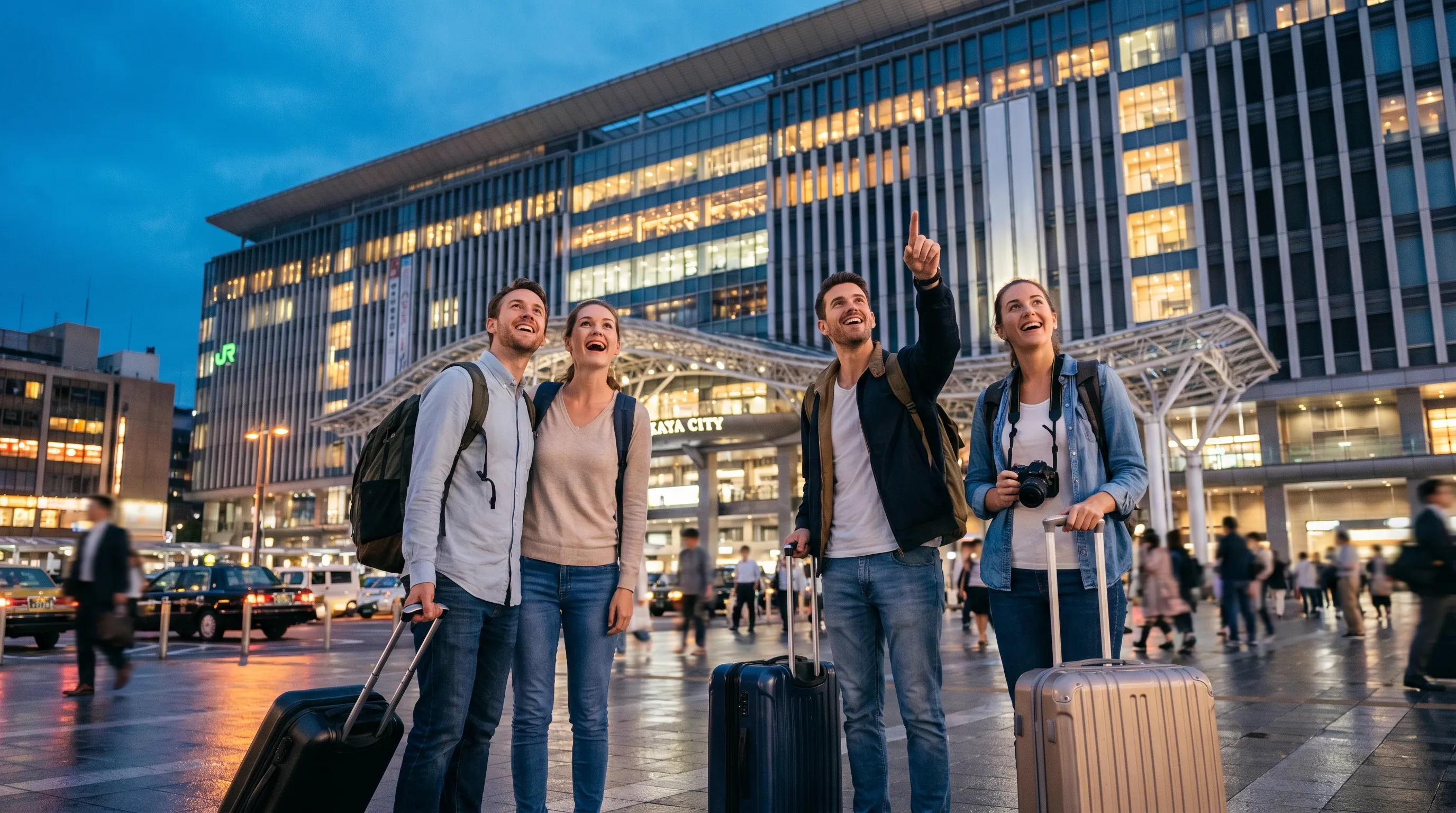
The gravitational center for transit in Kyushu. The JR Hakata City complex (Amu Plaza, Hankyu) sits directly above the bullet train and subway. The area is highly functional, with the densest hotel inventory in the city, 24-hour chain restaurants on hotel ground floors, and a 5-minute subway connection to Fukuoka Airport.
- Best for: Shinkansen arrivals, airport connections, short stays (1–3 nights), day-trip-heavy itineraries
- Worst for: Travelers wanting organic neighborhood character, late-night bar-hopping within walking distance, boutique shopping
- Price range: Off-peak ¥10,000–¥25,000 / Peak ¥25,000–¥40,000+
- Transit: FUK Airport 5 min (subway, ¥260) | Tenjin 5 min (subway) | Hakata Station 0–10 min walk
- Anchor hotels: Miyako Hotel Hakata (Luxury), JR Kyushu Hotel Blossom Fukuoka (Mid), the b hakata (Budget)
Full area breakdown with hotel picks: Best Hotels Near Hakata Station.
Tenjin
Fukuoka’s commercial, fashion, and youth culture core. Department stores (Daimaru, Mitsukoshi, PARCO) cluster within a few blocks, connected by the Tenjin Underground City — a 1-kilometer subterranean shopping network. Daimyo and Imaizumi to the west are Fukuoka’s densest cafe-and-bar districts.
- Best for: Shoppers, longer stays (5+ nights), younger travelers, Korean weekend trippers, couples on romantic trips
- Worst for: Travelers with excessive luggage who need frequent subway transfers, those wanting 24-hour chain dining on the hotel doorstep
- Price range: Off-peak ¥9,000–¥22,000 / Peak ¥20,000–¥35,000+
- Transit: FUK Airport 11 min (subway, ¥260) | Hakata Station 5 min (subway) | Tenjin 0–10 min walk
- Anchor hotels: Solaria Nishitetsu Hotel Fukuoka (Upscale), Hotel Monterey La Soeur Fukuoka (Mid)
Full Tenjin hotel picks and sub-area map: Best Tenjin Hotels.
Nakasu / Nakasu-Kawabata
A river island between Hakata and Tenjin, functioning as Fukuoka’s primary entertainment and nightlife district. The famous riverside yatai (open-air food stalls) are the main draw — several hundred izakayas and bars line the Naka River.
- Best for: Hardcore foodies, late-night eaters, travelers whose primary goal is the yatai experience
- Worst for: Families with young children, light sleepers, travelers who want calm neighborhood streets
- Price range: Off-peak ¥8,000–¥20,000 / Peak ¥18,000–¥30,000+
- Transit: FUK Airport 10 min (subway) | Hakata Station 3 min (subway) | Tenjin 2 min (subway)
- Anchor hotels: Hotel Vista Fukuoka Nakasu Kawabata (Mid), The Lively Fukuoka Hakata (Lifestyle), Mitsui Garden Hotel Fukuoka Nakasu (Upscale)
Yatai proximity picks and area details: Top Hotels Near Nakasu Yatai.
Momochi / Sea Hawk / PayPay Dome area
A modern, master-planned waterfront zone built on reclaimed land. Features wide streets, Fukuoka Tower, and PayPay Dome. It operates more like an integrated resort than a city neighborhood — spacious rooms and beach access, but separated from the urban core by a 20-minute bus ride.
- Best for: Families wanting large resort rooms, concert-goers, baseball fans, beach access in summer
- Worst for: First-time urban explorers, travelers without a transport plan for evening dining, anyone relying solely on the subway (the Nanakuma Line is the only subway here, with limited evening frequency)
- Price range: Off-peak ¥15,000–¥35,000 / Peak ¥30,000–¥60,000+
- Transit: FUK Airport 30–40 min (subway + bus) | Hakata Station 20–25 min (bus) | Tenjin 15–20 min (bus)
- Anchor hotels: Hilton Fukuoka Sea Hawk (Luxury Resort), The Residential Suites Fukuoka (Mid/Family)
Ohori / Akasaka
Centered around Ohori Park and Fukuoka Castle ruins, this is the quiet, affluent residential side of Fukuoka. Museum access, tree-lined streets, running paths, and third-wave coffee replace the neon density of Hakata and Tenjin.
- Best for: Returning visitors, runners, slow travelers, art lovers, families seeking quiet parks
- Worst for: Travelers on a rushed 24-hour schedule, anyone prioritizing late-night entertainment within walking distance
- Price range: Off-peak ¥10,000–¥25,000 / Peak ¥20,000–¥35,000
- Transit: FUK Airport 15 min (subway) | Hakata Station 10 min (subway) | Tenjin 3 min (subway)
- Anchor hotels: Hotel Kura (Mid), various upscale boutique properties
Still unsure between Hakata and Tenjin? The full side-by-side transit, dining, and seasonal breakdown is in Hakata vs Tenjin: where to stay.
How many nights you actually need
The length of your stay changes the area recommendation, the itinerary scope, and which hub articles are most relevant.
1 night — Stopover or transit only. This is a ferry turnaround or a buffer before a Shinkansen departure. Base yourself at Hakata Station to minimize luggage dragging. Spend the evening at the Nakasu yatai (arrive 19:00–20:00) and eat Hakata ramen late. Do not attempt day trips. Read Best Hotels Near Hakata Station to find a 24-hour-staffed property within 5 minutes of the bullet train.
2 nights — The Kyushu add-on. Common itinerary extension after Tokyo/Osaka/Kyoto. Stay in Tenjin or Hakata. Day 1: Explore Canal City Hakata, Kushida Shrine, eat motsunabe for dinner. Day 2: Walk Ohori Park in the morning, spend the afternoon in the Tenjin / Daimyo shopping district, eat at the yatai in the evening.
3 nights — The sweet spot. This is the right length for a first-time visitor who wants to feel like they actually experienced Fukuoka rather than grazed it. Base yourself in one hotel (Hakata or Tenjin — use the 60-second test at the end of this article). Two days for city food and exploration; one day for a half-day trip to Dazaifu Tenmangu Shrine.
5 nights — Fukuoka as basecamp. Stay near Hakata Station to access JR trains. Spend 2–3 days in the city and use the remaining days for day trips: Dazaifu (culture), Itoshima (coastal scenery), Yanagawa (canal boat ride). A 5-night stay is also long enough to comfortably cover both the luxury and budget ends of the food spectrum.
7+ nights — Full Kyushu loop. If staying this long, do not base solely in Fukuoka. Spend 2 nights in Tenjin for shopping and food, buy a JR Kyushu pass, then travel to Kumamoto, Kurokawa Onsen, or Nagasaki and return to spend the final night near Hakata Station before flying out. This profile benefits most from Affordable Hotels Under ¥15,000 for the Fukuoka bookend nights.
Best months to visit
Season selection has a larger impact on price and availability in Fukuoka than in most Japanese cities, primarily because of one event: the Hakata Gion Yamakasa festival in July.
Spring (March–May)
Weather: 10°C–20°C, low rainfall. Crowds: High to Extreme. Price multiplier: 1.5x–2.5x.
The cherry blossom window (late March to early April) centered on Maizuru Park (Fukuoka Castle ruins) is the city’s most crowded period. Hakata Dontaku Port Festival (May 3–4, 2+ million attendees) is the secondary crowd spike. Book hotels 3–6 months in advance for both windows. Tenjin’s Akasaka sub-area is 8 minutes on foot from Maizuru Park — the closest base for hanami.
Rainy season (June–mid-July)
Weather: 22°C–28°C, heavy rainfall (250mm+), very humid. Crowds: Low. Price: 1.0x (cheapest window).
The structural advantage of the Tenjin Underground City becomes practical here — you can spend entire mornings shopping without going outdoors. Budget travelers who can tolerate umbrella-centric days will find the best prices of the year during June.
Summer (mid-July–September)
Weather: 28°C–35°C, high humidity, typhoon risk from August. Crowds: Extreme in July, Medium in August. Price multiplier: 2.0x–3.0x in July.
The Hakata Gion Yamakasa (July 1–15) is the city’s biggest festival, culminating in a pre-dawn float race from Kushida Shrine at 4:59 AM on July 15. Hakata hotels sell out 3–6 months in advance and prices triple. If visiting during Yamakasa, book Tenjin early and take the early-morning subway to the festival. August crowds drop but humidity stays extreme; Itoshima beaches are the saving grace.
Autumn (October–November)
Weather: 15°C–22°C, crisp, low rainfall. Crowds: Medium. Price multiplier: 1.2x.
The best all-round season for first-time visitors. Perfect walking weather, the start of motsunabe and mizutaki hot pot season, and Kyushu Grand Sumo Tournament in November. Autumn foliage at Yusentei Park (mid-November) is underrated relative to the more famous spring cherry blossoms.
Winter (December–February)
Weather: 5°C–10°C, chilly, rare snow. Crowds: Low (except Lunar New Year). Price: 1.0x–1.5x (spikes during Lunar New Year).
An underrated season. Fukuoka’s compact layout and indoor-connected hotel options (Canal City, Tenjin Underground City) make cold days manageable. Local oyster huts (kaki-goya) open in Itoshima during winter, and yatai oden is widely considered better in cold weather. Lunar New Year (usually February) brings a sharp spike in Korean and Taiwanese visitor volume — book early if visiting then.
Getting to and around Fukuoka
From Fukuoka Airport (FUK)
The Fukuoka City Subway Kuko (Airport) Line is consistently cited as one of the best airport links in the world. Five minutes to Hakata Station, 11 minutes to Tenjin, ¥260 each — the domestic terminal subway entrance is a covered walkway from arrivals. Taxis to Hakata cost ¥1,500–¥2,000 and take 15 minutes. Airport buses exist but are slower due to traffic and are only relevant for specific hotel pickup routes.
Note: the subway serves the Domestic Terminal only. International arrivals take the free shuttle bus across to the Domestic Terminal and pick up the subway there, or skip the transfer entirely with the airport limousine bus, which runs from the International Terminal directly to Hakata Station and Tenjin. See the airport transfer and your first night for what that means when choosing where to sleep on arrival.
From Hakata Station (Shinkansen arrivals)
You exit directly into Hakata. Subway access to Tenjin or Nakasu is 5 minutes and ¥210. Taxis to most central hotels run ¥700–¥1,500 and are useful when arriving with heavy luggage. Miyako Hotel Hakata is the only major hotel in Fukuoka connected to the station via an underground covered passage — no outdoor walking required even in heavy rain.
From Hakata Port (Busan ferry)
Jetfoil and ferry services from Busan dock at the Hakata International Ferry Terminal. BRT (Bus Rapid Transit) articulated buses run frequently from the International Terminal directly to Hakata Station and Tenjin. Journey time is approximately 20–25 minutes to Hakata Station, ¥310.
Inside Fukuoka
The subway system (Kuko, Hakozaki, and Nanakuma lines) covers the primary tourist triangle cleanly. Standard IC cards — Suica, Pasmo, Icoca — work seamlessly on all Fukuoka subways, JR trains, buses, and at convenience stores. Local equivalents are Nimoca, Sugoca, and Hayakaken; any of the six are interchangeable on the main network.
The Nishitetsu Bus network is dense but visually daunting for first-timers. Rely on Google Maps for precise boarding stops. Walking between Hakata, Nakasu, and Tenjin takes 15–25 minutes on flat streets — more practical than it sounds for most daylight hours.
Day-trip transit
- Dazaifu: Nishitetsu Tenjin–Omuta Line from Nishitetsu-Fukuoka (Tenjin) Station, transfer at Futsukaichi — approximately 25–30 minutes, ¥420 round trip.
- Itoshima: Subway Kuko Line westbound from Fukuoka Airport or Hakata — the line transitions seamlessly into the JR Chikuhi Line toward Chikuzen-Maebaru. No transfer needed.
- Yanagawa: Nishitetsu south from Tenjin, approximately 40–50 minutes. Famous for flat-bottom boat rides through the canal system.
Realistic budget
All figures use 158 JPY/USD as the conversion rate.
Per-night hotel
| Tier | JPY / night | USD / night |
|---|---|---|
| Budget / business hotel | ~¥10,000 | ~$63 |
| Mid-scale / lifestyle | ¥15,000–¥25,000 | $95–$158 |
| Upscale | ¥30,000–¥50,000 | $190–$316 |
| Luxury | ¥60,000+ | $380+ |
For budget picks under ¥15,000 with a quality filter applied: Affordable Hotels Under ¥15,000.
Daily food
| Tier | JPY / day | USD / day |
|---|---|---|
| Budget | ¥3,000 | $19 |
| Mid | ¥6,000 | $38 |
| Upscale | ¥12,000+ | $76+ |
Budget tier: Konbini breakfast, cheap ramen lunch (~¥900), fast-casual dinner. Mid tier: Cafe breakfast, ramen lunch, one yatai or casual izakaya dinner with drinks. Upscale tier: Coffee shop, high-end sushi or mizutaki kaiseki, sake pairings.
Daily transport
¥1,500 ($9) for standard inner-city subway use. Budget ¥3,000 ($19) on days with a day trip (Dazaifu, Itoshima, Yanagawa).
3-night couple total estimate
| Budget level | JPY total | USD total |
|---|---|---|
| Budget | ¥80,000 | ~$500 |
| Mid | ¥150,000 | ~$950 |
| Upscale | ¥300,000+ | ~$1,900 |
These estimates include accommodation, food, local transport, and typical activity costs. They exclude international flights and shopping.
First-time mistakes to avoid
Eight mistakes that travel forum consensus identifies as the most common and avoidable.
1. Booking the wrong area for the trip type. Booking a resort hotel in Momochi (Hilton Sea Hawk is the most frequently cited example) because the photos are spectacular, then realizing it requires a 20+ minute bus ride to reach any late-night dining. Check the transit column in the area section above before confirming a reservation.
2. Underestimating Yamakasa crowds in July. July 1–15 sees hotel rates in Hakata triple and sell out 3–6 months in advance. Travelers who book flights without checking festival dates get sticker-shock at room prices. If visiting July 1–15 deliberately, book Tenjin instead — rates are less affected.
3. Misunderstanding yatai hours. Yatai are evening attractions, not afternoon ones. Stalls begin setting up around 17:30, hit their stride by 20:00, and most close by 01:00–02:00. Many rest on Sundays or during heavy rain. Arriving at 16:00 expecting an open stall is the most-reported yatai disappointment in reviews.
4. Attempting Fukuoka in 1 day. Treating Fukuoka purely as a transit point to Kyoto or Tokyo means missing the food culture, which takes several evenings to properly sample. Even 2 nights is a significant improvement over a single-day visit.
5. Booking a semi-double room as a couple. Japanese business hotel “semi-double” beds are 120cm wide — smaller than a US full-size. Western couples with two large suitcases will not physically fit comfortably. Always book at minimum 18m² and confirm the bed is labeled Standard Double or Twin rather than Semi-Double.
6. Assuming yatai accept credit cards. While some modernized stalls now accept PayPay or Alipay, the majority are strictly cash-only. Bring ¥5,000–¥10,000 in ¥1,000 notes specifically for yatai evenings.
7. Eating only at chain restaurants. Fukuoka is the birthplace of Hakata-style tonkotsu ramen. Skipping local specialty shops (Hakata Issou, Sanpoutei) for generic chain ramen available in Tokyo is the most-cited “culinary miss” in travel forum retrospectives.
8. Confusing Hakata with Fukuoka. Fukuoka is the city name; Hakata is a specific ward (and the name of the Shinkansen station). Locals use the terms nearly interchangeably in conversation. On a map and in hotel searches, they mean different zones — booking “Hakata” on an OTA puts you near the station, which may or may not be what you want.
Cultural and practical primer
Check-in times. Standard check-in in Japan is strictly 15:00. Arriving early? All major hotels store luggage at the front desk for free while you explore — expect a claim tag and no questions.
Tipping. Do not tip anywhere in Japan. It is not expected, and leaving cash on a table will frequently result in a waiter chasing you down the street to return your “forgotten” change.
Tax-free shopping. Available at major department stores, Don Quijote, and electronics retailers. Present your physical passport at the register, and the pre-tax total must exceed ¥5,000. The discount is applied immediately — no reimbursement process.
Konbini. Fukuoka’s Lawson, 7-Eleven, and FamilyMart locations are logistical lifesavers. High-quality cheap meals, umbrella purchases, clean bathrooms, and ATMs that accept international debit cards 24 hours a day. The ATMs accept Visa, Mastercard, and Cirrus; the domestic 7-Bank ATM network at 7-Eleven is the most reliable for international cards.
Drinking and smoking age. Japan’s legal drinking and smoking age is 20. Convenience stores ask for ID confirmation; most vending machines that sell alcohol are honor-system.
Smoking. Walking while smoking on public streets is illegal in central Fukuoka. Designated outdoor smoking zones are marked and visible near major stations and department stores. Most restaurants ban indoor smoking; some older izakayas still permit it — check before sitting.
Public bath and onsen etiquette. If your hotel has a public bath (sentō or onsen), wash and rinse your body thoroughly at the shower stations before entering the communal tub. Swimsuits are strictly forbidden. Tattoos: historically banned across Japan, but increasingly some hotels and modern facilities provide adhesive cover stickers or have relaxed the rule for foreign guests — ask at the front desk before assuming access.
What to eat that you cannot get elsewhere
Fukuoka’s food identity is specific enough that most travelers plan meals around these five dishes specifically.
Hakata tonkotsu ramen. The original style — thin straight noodles in a milky, rich pork-bone broth that simmers for 12–18 hours. Fukuoka’s legacy shops (Hakata Issou, Sanpoutei, the original Ichiran location) are considered the reference point; versions available in Tokyo or overseas are approximations.
Motsunabe. A communal hot pot built on beef offal (motsu), simmered in either a soy-based or miso broth with garlic, chives, and cabbage. The texture is rich and gelatinous; the flavor is significantly cleaner than the description suggests. A winter specialty, but available year-round at dedicated restaurants.
Mizutaki. A lighter chicken hot pot in clear dashi broth. Often served as a multi-course meal, starting with the broth drunk plain, then adding chicken and vegetables, finishing with rice or noodles cooked in the remaining soup. Considered more refined than motsunabe.
Mentaiko. Spicy marinated pollock roe, produced primarily in Fukuoka. Available as a standalone dish, on onigiri (rice balls), in pasta, or as a topping for bread at local bakeries. The version available outside Fukuoka often lacks the intensity of freshly made local product.
Yatai oden and skewers. The atmosphere of eating at a riverside yatai is inseparable from the food. Standard offerings: oden (simmered fish cakes, daikon, egg in dashi broth), chicken skewers, and ramen. Prices typically run ¥500–¥1,500 per item; each stall seats 6–12 people. The Nakasu river strip has the largest concentration; Tenjin has smaller clusters near the Nishitetsu station.
Day-trip options worth your time
Fukuoka’s position in northern Kyushu makes it an unusually good day-trip base. The following four are the most consistently recommended in aggregate travel forum advice.
Dazaifu Tenmangu. Japan’s most visited Shinto shrine outside Tokyo, dedicated to the god of learning. The main hall is currently under reconstruction (due for completion 2027), but the grounds — including a 1,500-tree plum grove — remain open. Access: Nishitetsu from Tenjin, 25–30 minutes, ¥420 round trip. Allow 2–3 hours.
Itoshima. A coastal peninsula 30–40 minutes west of Fukuoka by subway/rail. Known for seafood restaurants, cafe culture, farm stands, and swimming beaches (summer). The Motonosumi Shrine’s 123-torii tunnel leading to a clifftop is the most photographed site. Allow a half to full day; a bicycle is the best mode of transport once there.
Yanagawa. A castle town 45–50 minutes south by Nishitetsu from Tenjin. Famous for flat-bottom boat (donko-bune) rides through the city’s 930km canal network, poled by guides who sing local folk songs. Unaju (eel on rice) is the local specialty. Allow 3–4 hours.
Nokonoshima Island. 10 minutes by ferry from Meinohama (Kuko Line). A small, quiet island with a flower garden that peaks in different species through spring and autumn, and a campsite. Far less crowded than the above three options — recommended for travelers who want a half-day escape from the city without major transit planning.
Who should optimize for what
A decision matrix for the most common first-time visitor profiles. Use this to identify which hub article to read next.
| Traveler profile | Best area | Optimize for | Read next |
|---|---|---|---|
| Solo first-timer, ≤3 nights | Hakata | Transit + food depth | Best Hotels Near Hakata Station |
| Couple, 5 nights, shopping/dining focus | Tenjin | Walkable retail, Daimyo cafes | Best Tenjin Hotels |
| Family with children under 12 | Hakata (Sumiyoshi) | Large rooms, indoor mall access | Best Family Hotels in Fukuoka |
| Korean weekend tripper (2 nights) | Tenjin or Nakasu | Nightlife, yatai, short commute | Top Hotels Near Nakasu Yatai |
| Tokyo/Osaka veteran seeking contrast | Tenjin or Ohori | Neighborhood character, slow dining | Best Luxury Hotels in Fukuoka |
| Kyushu loop traveler, Fukuoka bookend | Hakata | Shinkansen access, late check-in | Best Hotels Near Hakata Station |
| Luxury traveler, no budget ceiling | Tenjin (Daimyo) | Ritz-Carlton, Grand Hyatt, Solaria Club | Best Luxury Hotels in Fukuoka |
| Budget traveler under ¥12,000/night | Hakata (Hakataeki-minami) | Value near station, 24h dining | Affordable Hotels Under ¥15,000 |
| Yatai-first foodie | Nakasu or Tenjin | 15-min walk to river stalls | Top Hotels Near Nakasu Yatai |
| Festival visitor (Yamakasa July 1–15) | Tenjin | Avoid Hakata rate doubling | Hakata vs Tenjin: where to stay |
The Hakata anchor
Miyako Hotel Hakata
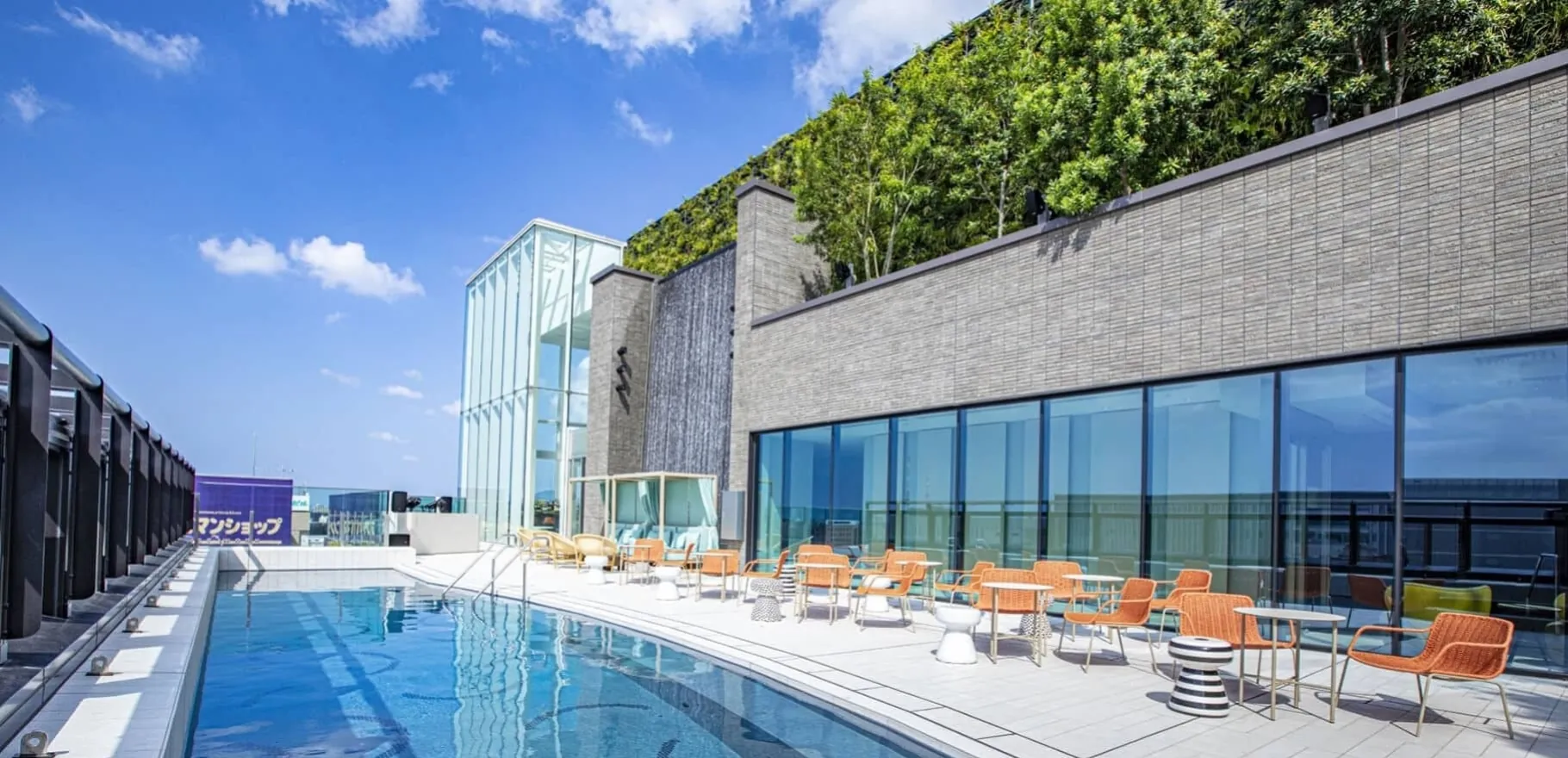
The most transit-optimized hotel in Fukuoka — Subway Exit 7 connects directly into the basement level via a covered underground passage, so you move from a bullet-train carriage to the front desk without stepping outdoors. At 30+ square meters, rooms are exceptional by Japanese business-hotel standards, and the rooftop natural onsen is unusual for a station property. Rated 9.2 across 3,000+ Booking reviews, the highest score of any transit-adjacent hotel in the city. For travelers using Fukuoka as a Kyushu rail hub, no other property delivers this combination of access and quality. Demand note: the highest-searched transit hotel in Fukuoka at 18,100 monthly searches — sells out months in advance on Shinkansen-heavy weekends.
How to decide your area
A 60-second test. Answer three questions in order and follow the first match.
Question 1: Is your itinerary built around Shinkansen day-trips or tight airport connections? If yes → choose Hakata. The five-minute walk between the station and your room compounds across a multi-day trip into meaningful time savings. Read Best Hotels Near Hakata Station and stop.
Question 2: Is shopping or dining variety a meaningful share of the trip — and are you staying 4 nights or more? If yes → choose Tenjin. The walkable retail and restaurant density saves 25–40 minutes of round-trip subway commuting daily. Read Best Tenjin Hotels and stop.
Question 3: Is the yatai experience your single highest priority? If yes → consider Nakasu or Tenjin. Nakasu puts you within a 10-minute walk of the main stall strip; Tenjin is 15 minutes. Read Top Hotels Near Nakasu Yatai and stop.
If none of the above applies clearly, default to Hakata. Transit flexibility matters more than retail proximity for travelers who have not yet decided what they are optimizing for. The full side-by-side comparison: Hakata vs Tenjin: where to stay.
FAQ
Is Fukuoka worth visiting if I’ve only been to Tokyo and Osaka before?
Yes. Fukuoka is walkable, famously food-forward, and considerably less crowded than Tokyo or Osaka. It operates as a manageable gateway to the rest of Kyushu’s nature and onsen, with a food culture — tonkotsu ramen, yatai stalls, motsunabe — distinct enough to justify the trip on its own.
How many days do I need in Fukuoka?
The standard recommendation across travel forums is 2–3 nights to adequately explore Hakata, Tenjin, and Nakasu, plus an additional 1–2 days if you plan day trips to Itoshima or Dazaifu. A 1-night stopover is possible but leaves the food culture largely unexplored.
Hakata or Tenjin — which area should I stay in?
Stay in Hakata if you are prioritizing Shinkansen travel, heavy transit connections, or short stays under 3 nights. Stay in Tenjin if you prioritize walking to department stores, trendy cafes, and nightlife. The full breakdown — including sub-areas, seasonal differences, and a decision matrix — is in Hakata vs Tenjin: where to stay.
What is the best month to visit Fukuoka?
Late October through November offers crisp walking weather, autumn foliage at Yusentei Park, and the start of hot pot season without spring crowds. Late March to early April is also excellent for cherry blossoms at Maizuru Park, though hotel prices rise 1.5x–2.5x. Avoid Hakata during July 1–15 (Yamakasa) unless you specifically want the festival, as rooms triple in price.
Do I need a car in Fukuoka?
No. The subway connects Fukuoka Airport to Hakata Station in 5 minutes and Tenjin in 11 minutes for ¥260. Walking between Hakata, Nakasu, and Tenjin takes 15–25 minutes on flat streets. A car is only useful if you plan to explore rural Kyushu beyond the day-trip options covered above.
Is Suica or Pasmo accepted in Fukuoka?
Yes. While Fukuoka has its own IC cards (Nimoca, Sugoca, Hayakaken), the national IC network is fully integrated. Your Suica, Pasmo, or Icoca card works on all local subways, JR trains, buses, and at convenience stores across the city.
What is the cheapest way to get from Fukuoka Airport to my hotel?
The Fukuoka City Subway Kuko Line connects the domestic terminal directly to Hakata Station in 5 minutes and Tenjin Station in 11 minutes for ¥260 — widely cited as one of the cheapest and fastest airport transfers in the world. Taxis to Hakata run ¥1,500–¥2,000.
How much English is spoken in Fukuoka hotels and restaurants?
Upscale and international chain hotels consistently have English-speaking staff. Budget business hotels and local restaurants vary. Google Translate’s camera feature covers most menu and sign situations. Overall, Fukuoka’s hospitality industry is well-accustomed to international visitors.
What should I eat in Fukuoka that I cannot get elsewhere?
Fukuoka’s five signature dishes: Hakata tonkotsu ramen, motsunabe (beef offal hot pot), mizutaki (chicken hot pot), mentaiko (spicy pollock roe), and yatai oden and skewers eaten at riverside open-air stalls.
Is Fukuoka safe at night?
Yes. Fukuoka is considered extremely safe by international standards. Nakasu operates as an entertainment district with some adult establishments and aggressive bar promoters, but it is heavily policed and physically safe to walk through. Violent crime is exceedingly rare.
Read next
- Hakata vs Tenjin: where to stay — Full district comparison with sub-areas, seasonal pricing, and the decision matrix
- Best Hotels Near Hakata Station — Five editorial picks for transit-first travelers, with arrival scenarios
- Best Luxury Hotels in Fukuoka — Where to stay when budget is not the constraint