Best Tenjin Hotels in Fukuoka — Stay in Shopping & Nightlife Central
Tenjin is Fukuoka's commercial heart — dense department stores, 600 meters of underground shopping, Fukuoka's most-concentrated cafe district in Daimyo, and a late-night scene that runs well past midnight. Picking the right sub-area within Tenjin determines whether you wake up 60 seconds from Daimaru or 10 minutes from it.
Last updated: May 2026
Curated Google My Map — third-party cookies may be set by Google; see privacy policy.
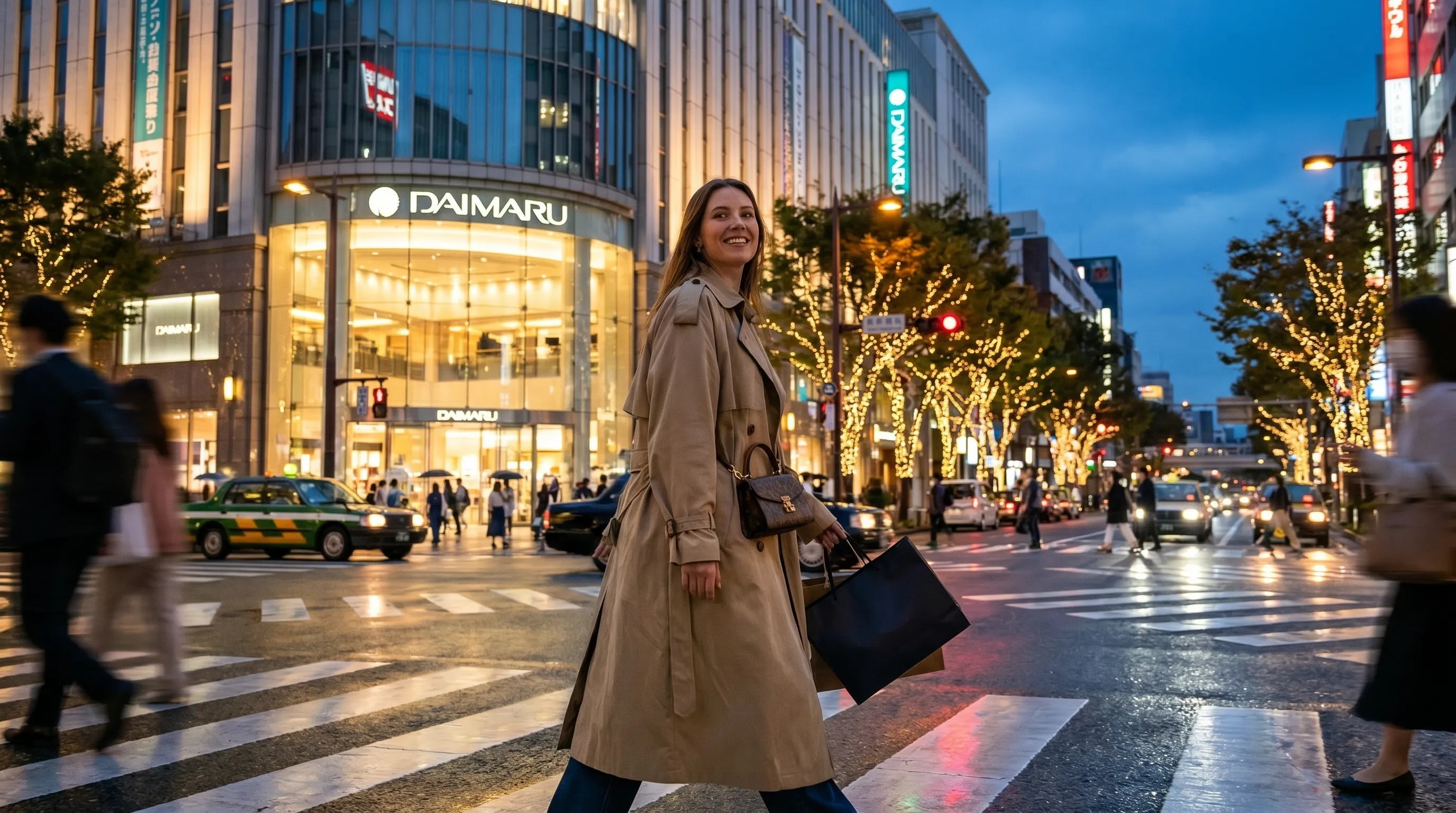
Tenjin is Fukuoka’s commercial center — the Shibuya of Kyushu. Walk out of the right hotel lobby and Daimaru, Mitsukoshi, Parco, and Solaria Plaza are within 60 seconds. Walk a few blocks west and Daimyo’s alley network of cafes and vintage boutiques begins. Stay five nights and the question shifts from “where do I shop?” to “which corner of Tenjin actually fits how I travel?” This guide maps the sub-areas, ranks the hotels by what they’re actually best at, and cuts the decision to three questions.
The short version
| Hotel | Sub-area | Walk to Tenjin Stn | Walk to Daimaru | Off-peak price | Booking score | Noise level |
|---|---|---|---|---|---|---|
| Solaria Nishitetsu Hotel Fukuoka | Tenjin Core | 3 min | 1 min | ¥16,000–¥23,000 | 8.8 | Low (upper floors, double-glazed) |
| Hotel Monterey La Soeur Fukuoka | Daimyo | 5 min | 6 min | ¥11,000–¥15,000 | 8.1 | Low–Med |
| Cross Life Hakata Tenjin | Haruyoshi | 10 min (5 to Minami) | 7 min | ¥10,000–¥14,000 | 8.5 | Low |
| Richmond Hotel Fukuoka Tenjin | Watanabe-dori | 10 min (3 to Minami) | 4 min | ¥11,000–¥15,000 | 8.4 | Low |
| THE BASICS FUKUOKA | Hakata East | Subway needed | Subway needed | ¥12,000–¥18,000 | 8.6 | Low |
| Hotel Mystays Fukuoka Tenjin | Tenjin North | 3 min | 8 min | ¥7,000–¥10,000 | 7.8 | High (Fri–Sat nights) |
Tenjin sub-areas decoded
Tenjin is not a single neighborhood — it is six or seven distinct zones packed into roughly 2 square kilometers. Getting the sub-area right matters more than the hotel star rating in most cases.
Tenjin Core. The intersection of Daimaru, Mitsukoshi, Iwataya, Parco, Solaria Plaza, and Solaria Stage within walking distance of each other. The Tenjin Underground City (Chikagai) runs 600 meters beneath the surface, connecting Tenjin Station to the Nishitetsu Fukuoka terminal via covered shops — useful on rainy days. This is the maximum-retail-access zone. It gets crowded on weekends and the major intersections are noisy during rush hours, but upper-floor hotels insulate well.
Daimyo. Immediately west of Tenjin core — a 5–8 minute walk from Daimaru. Narrow alleys replace department stores with vintage clothing shops, craft beer bars, third-wave coffee roasters, and an increasingly upscale dining scene. Hotel Monterey La Soeur Fukuoka sits in the middle of this district. The Ritz-Carlton, Fukuoka (opened 2023) anchors the new Daimyo Garden City development on the western edge, pushing the neighborhood’s premium floor noticeably higher. Calmer mornings than the core; nightlife peaks earlier and quieter than Oyafuko-dori.
Imaizumi. South of Tenjin Station and east of Daimyo — a 5–10 minute walk from Tenjin core. Imaizumi is the emerging dining and wine-bar frontier. Fewer hotels but growing restaurant density, smaller and more independent than Daimyo. Good base for travelers who want Tenjin proximity with a neighborhood feel.
Watanabe-dori. A wide boulevard running south from the Tenjin core, lined with mid-range business hotels and chain restaurants. Richmond Hotel Fukuoka Tenjin is the representative property. Transit-convenient via Tenjin-minami Station on the Nanakuma Line (3 minutes to Hakata). Quieter than the core and more practical than atmospheric.
Akasaka. One subway stop west of Tenjin on the Kuko Line — a 10-minute walk from Daimaru. More residential, quieter, and closer to Ohori Park and the Fukuoka Castle ruins (Maizuru Park) — the main cherry blossom site in the city. Travelers staying a week or more often prefer Akasaka for its neighborhood texture. Hotel inventory is thin here; most guests choosing Akasaka are staying in private apartments.
Haruyoshi. South of the Tenjin core, between the downtown grid and the Naka River. Cross Life Hakata Tenjin is the standout hotel here — a 2021 build with a free public bath that consistently draws guests who want Tenjin access with a quieter, more residential atmosphere. The local dining scene is smaller but the area has genuine calm by Fukuoka standards.
Oyafuko-dori and Tenjin North. The traditional nightlife strip running north of the main Tenjin shopping cluster. Clubs, late-night izakaya, and karaoke venues concentrate here. Hotel Mystays Fukuoka Tenjin sits within 2 minutes of this strip — useful for travelers who want to be inside the nightlife, problematic for those who want to sleep before 02:00 on weekends.
Tenjin North (broader). Beyond Oyafuko-dori, Tenjin North shades into office and commercial blocks that are quieter during the day and moderately lively at night. The sub-area lacks the boutique density of Daimyo or the transit convenience of the core, but it is the closest hotel zone to the Nishitetsu Fukuoka (Tenjin) bus terminal for international bus connections.
The Tenjin core pick
Solaria Nishitetsu Hotel Fukuoka
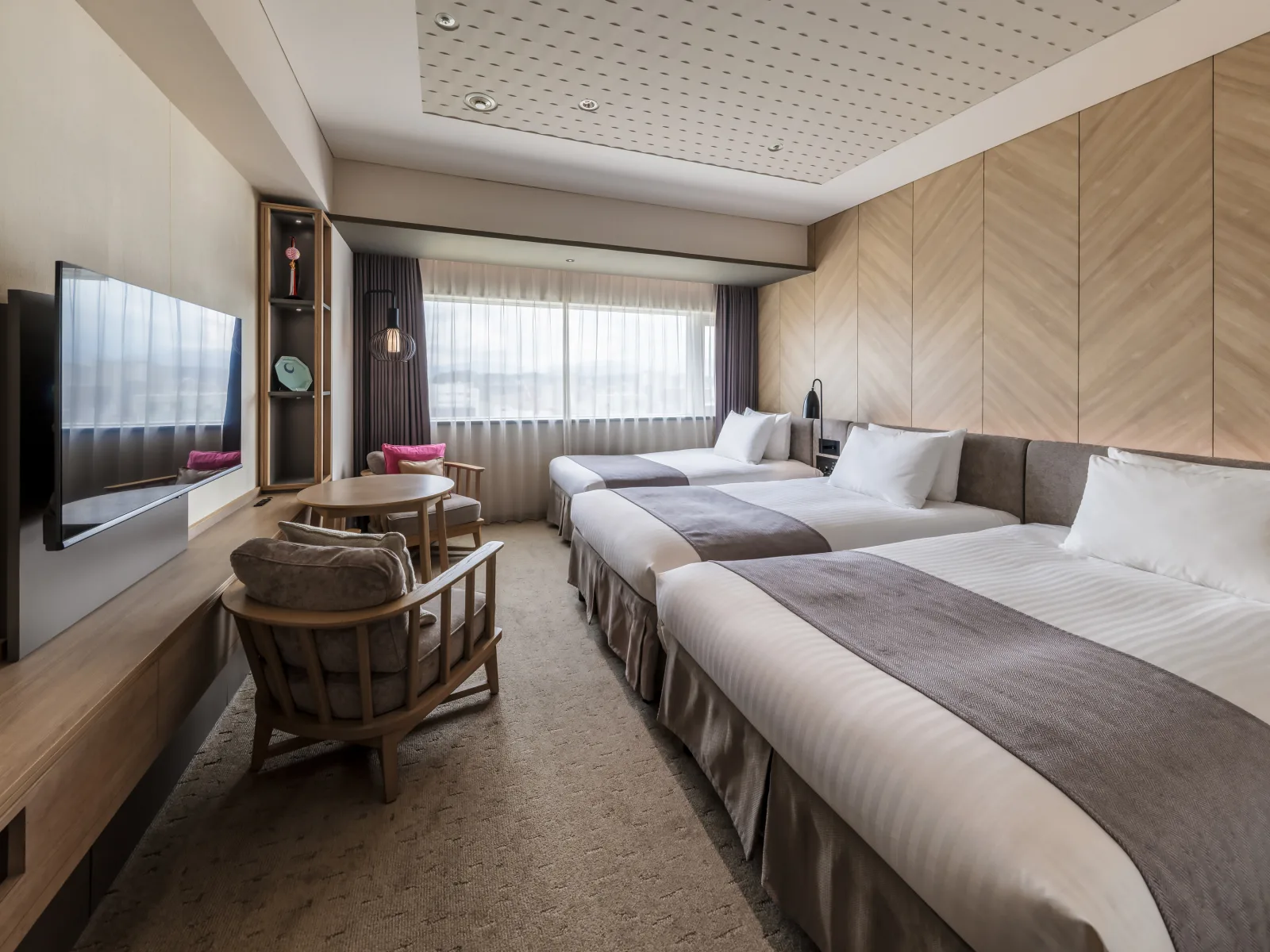
Built directly into the Nishitetsu Fukuoka (Tenjin) Station complex, Solaria sits above Solaria Plaza with Daimaru one minute away, Mitsukoshi one minute away, and direct underground concourse access to the Tenjin subway and onward to Hakata and Fukuoka Airport. Rooms on high floors face the Tenjin skyline with double-paned glass insulating them from one of Fukuoka’s busiest intersections — the most-cited reason business travelers and repeat shoppers return. The 17th-floor Red Flamma breakfast room with panoramic city views differentiates it over every other hotel at this price point in the district. Booking scores of 8.8 across 600+ reviews and 9.1 on Agoda across 2,000+ reviews reflect consistent delivery at the premium end of the mid-range. Alipay and WeChat Pay are accepted; Korean-speaking staff are available. Demand note: Solaria draws 22,200 monthly brand searches — the highest of any hotel in Tenjin — and upper-floor park-facing rooms book out first on Yamakasa, Golden Week, and Lunar New Year weekends. Verify dates early.
The Daimyo design pick

Hotel Monterey La Soeur Fukuoka
Belgium Art Nouveau interiors in the middle of Daimyo — Fukuoka’s densest cafe-and-boutique district — at a price point well below Solaria. All 191 rooms have hardwood floors, Mirable micro-bubble showerheads, and pajamas included, which are unusual differentiators at ¥11,000–¥15,000 off-peak. The breakfast buffet is consistently cited as a value advantage in Booking reviews (8.1 across 1,000+ reviews; 8.2 on Agoda across 2,000+). The honest caveats: bathrooms show some wear in older rooms, Wi-Fi reliability varies, and standard rooms are compact even by Japanese hotel standards. Noise level is low — Daimyo’s independent dining and bar scene quiets earlier than Oyafuko-dori. For travelers who prioritize a distinct aesthetic, walkable cafes, and moderate pricing, Monterey La Soeur is the most differentiated option in the Tenjin cluster.
The Hakata-side design alternative
Not every traveler staying for Tenjin’s shopping wants to be in Tenjin itself. The Basics Fukuoka is a 15–20 minute total transit time from Daimaru (subway + walk) but offers something no Tenjin hotel at any price currently matches: a towering multi-story library rotunda as its central lobby. For travelers who put design and atmosphere above walking-distance convenience, it deserves serious consideration alongside the Tenjin core options.

THE BASICS FUKUOKA
Seven minutes on foot from Hakata Station and five minutes by subway from Tenjin Station, The Basics anchors the Hakata-higashi sub-area with a property that has no equivalent in Tenjin — a soaring library lobby that guest photos describe as the main reason they booked. Rooms run large by Japanese standards, airport access from Hakata Station is 5 minutes on the Kuko Line (¥260), and Booking scores 8.6 across 2,000+ reviews with 8.6 on Agoda across 12,000+. The trade-off versus Tenjin placement is real: Tenjin shopping requires a subway trip (5 min, ¥260 each way), which adds 20–30 minutes of transit overhead per day for shopping-focused travelers. Best suited to travelers who want the design experience and transit efficiency of Hakata, with Tenjin as a day destination rather than a neighborhood base. Demand note: The Basics draws 33,100 monthly brand searches — the highest single-hotel volume in this article — driven by a distinctive lobby that earns significant organic photo coverage. Book early for weekend and holiday dates.
Cross Life, Richmond, and Mystays — the practical mid-range

Cross Life Hakata Tenjin
The surprise overperformer in the Tenjin mid-range research set. Despite sitting 10 minutes from the Tenjin core (5 minutes to Tenjin-Minami Station), Cross Life holds an 8.4 Booking score across 1,576+ reviews and 8.8 on Agoda across 19,000+ — above Hotel Monterey on both platforms. The differentiator is a free public bath (sentō) with evolving digital art, a dry sauna, and a cold plunge on the upper floor for all guests; separated wet-dry bathrooms in all 286 rooms; and a 55-item breakfast buffet (¥2,200) featuring Mentai France bread. A 2022-built property in the quiet Haruyoshi district, 5 minutes across Haruyoshi Bridge to the Nakasu yatai. Korean-language reviews are particularly strong — multilingual self check-in kiosks and confirmed Korean-speaking staff make it the top Korean-traveler pick in the cluster.

Richmond Hotel Fukuoka Tenjin
The dependable chain standard in the south-Tenjin corridor — 3 minutes to Tenjin-minami Station and 4 minutes to Daimaru. What separates Richmond from comparable business hotels is the free lobby amenity bar: skincare sets, bath salts, hair treatments, and premium drip coffee stocked daily for guests to take to their rooms. Standard rooms start at 18 m², meaningfully wider than the 13–15 m² floor common in this price band. Booking scores 8.4 across 1,200+ reviews, Agoda 8.8 across 10,000+ — the highest Agoda score of any hotel in this article. Design is deliberate corporate rather than atmospheric; for travelers who want a reliable mid-range without surprises on a Tenjin-stay, Richmond is the consistent pick. Note that a sister property, Richmond Hotel Tenjin Nishidori, sits deeper in the shopping core if location is the deciding factor.

Hotel MyStays Fukuoka Tenjin
The budget floor of the Tenjin market — 3–4 minutes from Tenjin Station’s West 1 Exit on the Kuko Subway Line, putting Fukuoka Airport at 14 minutes door-to-door on a single direct line with no transfer. Operated by Iconia Hospitality (formerly MyStays Hotel Management), the 217-room property sits within sight of Oyafuko-dori (Tenjin’s late-night ramen and izakaya street) and 3–5 minutes on foot from PARCO, Tenjin Underground Mall and Fukuoka Mitsukoshi. Standard Semi-Double at 11–13 m² is strictly for solo travelers — international leisure travelers with hard-shell suitcases should book the Standard Twin (15–18 m²) or a Superior category (which adds ReFa showerheads and SALONIA hair irons). The lobby Lavazza coffee machine and DHC amenity bar (skincare, bath salts) are unusually generous for the price tier and surface as recurring positives in OTA reviews. Honest caveats: the modular unit baths are visibly dated and low-ceilinged (uncomfortable for taller guests), and lower-floor rooms facing Oyafuko-dori pick up bar-crowd noise past midnight on weekends. Iconia’s direct-booking discount and GoTo Pass loyalty save roughly ¥500–1,000 per night versus OTAs and don’t justify fracturing your loyalty ecosystem for an international single-trip booking. Booking 7.8 / 3,800+ reviews; Agoda 8.2 / 4,200+ reviews.

Hotel MyStays Fukuoka Tenjin-South
The 177-room sister property to MyStays Fukuoka Tenjin, hidden inside the Haruyoshi izakaya cluster south of Tenjin core. The position trades the northern sister’s Kuko Line airport speed (Tenjin-Minami requires a Nanakuma-to-Kuko transfer at Hakata, ~22 minutes total) for a 5-minute walk to the Haruyoshi Bridge yatai cluster and immediate access to the Haruyoshi izakaya neighbourhood. Tenjin-Minami Station on the Nanakuma Line is 5 minutes on foot; Hakata Station is 3 minutes by subway since the 2023 extension. The 2025 rolling renovation introduced Smart TVs with Netflix and YouTube streaming across all rooms and fresh Simmons mattresses; the Superior Triple (28–33 m²) is the only category fully ReFa-upgraded (showerheads + hair dryers) and is the recommendation here. Pricing runs 10–15% lower than the northern Tenjin sister at comparable dates. Honest caveats: adjacent construction runs September 2025 through December 2026, with weekday work 8:00 AM to 7:00 PM (excluding Sundays) — request an upper floor at booking, and the airport transfer is the structural disadvantage. Booking 7.8 / 2,000+ reviews; Agoda 8.1 / 1,500+ reviews.
The Watanabe-dori quieter pick

Hotel Monte Hermana Fukuoka
Situated on Watanabe-dori — the broad boulevard running south from the Tenjin commercial core — Monte Hermana sits in the sub-area’s quiet residential-commercial pocket: close enough to Tenjin (10–12 min walk) and Nakasu yatai (8–10 min walk), but free from the weekend noise of Oyafuko-dori and the Nakasu entertainment zone. The 373 all-non-smoking rooms run 21–22 m², a measurably larger floor plan than the 13–15 m² common in comparable Tenjin business hotels — multiple reviews cite being able to open two full-size suitcases simultaneously. The women-only floor is the hotel’s most-cited differentiator: card-key elevator restriction means only floor-registered guests can reach the corridor, and DHC Olive Gold amenities (cleansing oil, milky face wash, moisturizing gel) are standard on that floor. Simmons pocketed coil mattresses and Gunze 100% cotton pajamas apply across all room types. Watanabe-dori Station on the Nanakuma Line is 2–3 minutes on foot; the 2023 Hakata extension brings Hakata Station to 5 minutes by subway. Booking 8.4 across 1,298+ reviews; Agoda 8.7 across 17,786+ reviews. Honest caveats: the European-chic interior is beginning to show age against post-2020 builds, and the on-site breakfast at ¥3,000 is steep for the tier — most guests use nearby convenience stores.
Tenjin shopping anatomy
Tenjin’s retail concentration is the densest in west Japan outside Osaka, and each major building serves a distinct demographic.
Daimaru Tenjin is the flagship department store — cosmetics, fashion, and food hall on the basement floor. Most international travelers from Taiwan, Korea, and China treat the basement food hall as a daily stop. Open until 20:00 on weekdays, 20:30 on weekends.
Mitsukoshi Tenjin adjoins Daimaru within 1 minute on foot — more traditional in positioning, skewing toward domestic luxury and high-end menswear, with a notable toy floor that families use. It bridges directly to Daimaru via a covered walkway on the second floor.
Iwataya is the third major department store in the cluster — 10 minutes east of Daimaru near Tenjin Station. Known for its curated home goods and Hakata-brand specialty foods. The basement grocery floor is particularly good for premium Japanese pantry items.
PARCO Tenjin caters to a younger demographic — international fast fashion, character goods, and the restaurant floor on the top level. Popular with travelers from Korea and Taiwan who follow Japanese youth fashion labels.
Solaria Plaza and Solaria Stage sit directly above and adjacent to the Nishitetsu station terminal. Plaza is the outdoor-facade building with mid-range fashion and restaurants; Stage is the underground-connected complex with cinema and additional retail. Solaria Nishitetsu Hotel occupies the tower above.
Tenjin Underground City (Tenjin Chikagai). The most important piece of infrastructure for rainy-day shopping — 600 meters of European-themed subterranean shops connecting Tenjin Station to the Nishitetsu terminal, linking most of the major buildings via underground concourses. Over 150 shops and restaurants. Hours are 10:00–20:00 for most shops. The Chikagai is also the dry-weather shortcut between the subway and the Nishitetsu terminal for any hotel within the core Tenjin grid.
Late-night dining in Tenjin
Tenjin’s late-night food scene has a different character than Hakata’s chain-restaurant dominance.
Yatai food stalls near Tenjin Chuo Park and Kego Park set up from approximately 18:00 and run to 02:00 on weekends. These are the classic open-air Fukuoka experience — counter seating under a fabric canopy, ramen, oden, and yakitori cooked to order, sake and shochu by the glass. The Tenjin-adjacent yatai clusters are smaller than the Nakasu riverside strip but less tourist-concentrated. Expect ¥800–¥1,500 per dish and a reservation-free queue.
Oyafuko-dori izakaya run through the night on Friday and Saturday — most establishments stay open until 02:00, several until 03:00. The street gets loud from approximately 21:00 onward; this is the late-night center of the district, not the family-dinner zone.
Shin-Shin ramen operates its Tenjin flagship at 3-1-6 Tenjin — tonkotsu broth from a well-regarded Hakata ramen lineage, with a queue that commonly extends past midnight on weekends. The 100-yen glass of milk served alongside is the brand detail that appears in most guest mentions. Opens at 11:00; closes when the soup runs out (typically 01:00–02:00 on busy nights).
For travelers arriving on late-evening flights, the combination of subway from FUK (11 min), convenience store at hotel level, and yatai stalls within 10 minutes on foot gives Tenjin a workable late-arrival food strategy that Hakata’s chain restaurants can’t fully replicate in terms of experience — though Hakata wins on 24-hour reliability.
Tenjin Big Bang redevelopment status
Tenjin is actively rebuilding its commercial core. The “Tenjin Big Bang” initiative — a city-led program to upgrade Fukuoka’s central business district — is producing several projects relevant to hotel stays.
ONE FUKUOKA BLDG opened in April 2025 near Tenjin Station, bringing approximately 120 new stores including international and domestic fashion labels not previously in Fukuoka. The building includes Ace Hotel Fukuoka on its upper floors — a first for the US boutique chain in Japan — making ONE FUKUOKA BLDG one of the most watched openings in the district this cycle.
Tenjin 1-7 Project (replacing the former IMS building adjacent to the core) is scheduled for completion in late 2026. It is expected to include luxury retail, additional hospitality, and dining, further elevating the immediate Tenjin Station zone. Until then, the Tenjin 1-7 site presents some daytime construction activity near the northern edge of the core — noise is minor and the site is fenced, but expect occasional detours on foot.
For travelers staying in 2026, the practical effect is that Tenjin’s shopping options are expanding rather than contracting. The ONE FUKUOKA BLDG addition in particular makes the Tenjin North / core boundary more retail-dense than it has been in over a decade.
Seasonal considerations
Hakata Dontaku (May 3–4). The largest festival in Fukuoka’s calendar — over 2 million attendees across the two days. The main street parade runs through central Tenjin, bringing massive foot traffic to the shopping district and making the streets around Daimaru and the Nishitetsu terminal extremely congested. Hotels across Tenjin and Hakata fill months ahead. If you’re visiting specifically for Dontaku, book at least three months prior; if Dontaku coincides with your dates unplanned, street access to Tenjin Core during the afternoon hours is limited and Daimaru operates at crowd-control capacity.
Tenjin Summer Festival (July). A smaller local festival centered on the Fukuoka City Hall plaza in the Tenjin area, running through July and into August. Less capacity impact than Dontaku, but it adds foot traffic to the Tenjin core on summer evenings and creates a lively outdoor atmosphere that contrasts with the city’s typically humid July heat.
Cherry blossom (late March to early April). Maizuru Park at Fukuoka Castle ruins is the main hanami site — a 10-minute walk from Tenjin Station or 8 minutes from Akasaka Station. For cherry blossom-focused trips, Tenjin’s western edge (Akasaka sub-area) is the most convenient base in the city. Hotel inventory near Maizuru Park itself is thin; Solaria and Monterey La Soeur are the most common picks for blossom-season stays that want Tenjin convenience paired with park access.
Hakata Gion Yamakasa (July 1–15). This festival is based in Hakata, not Tenjin, but it affects both districts. Hakata hotel rates double and sell out 3–6 months ahead. Tenjin hotels see milder demand increases — travelers specifically coming for Yamakasa frequently book Tenjin to avoid Hakata’s price premium, then take the early-morning subway to Nakasu-Kawabata Station for the July 15 finale. For this pattern, Solaria’s underground concourse connection to the subway makes it the most logistically convenient Tenjin base.
Who should pick which
| Traveler profile | Pick | Why |
|---|---|---|
| Shoppers: first visit, want mall access under 5 min | Solaria Nishitetsu | Literally above Solaria Plaza; Daimaru 1 min walk |
| Couples: cafe culture, boutique aesthetic, Daimyo access | Hotel Monterey La Soeur | In the middle of Daimyo’s best streets |
| Design-first travelers, transit efficiency matters too | THE BASICS FUKUOKA | Library lobby, spacious rooms, Hakata subway access |
| Budget travelers: need Tenjin location, sleep is secondary | Hotel Mystays Fukuoka Tenjin | ¥7,000–¥10,000, 3 min to station |
| Mid-range travelers: value + public bath + quiet | Cross Life Hakata Tenjin | 8.5 Booking, free sentō, quieter Haruyoshi location |
| Reliable mid-range, no surprises | Richmond Hotel Fukuoka Tenjin | 8.4 Booking, 4 min to Daimaru, corporate consistency |
| Korean travelers, language support priority | Cross Life or Solaria | Both have confirmed Korean language support in reviews |
| Cherry blossom focus (March–April) | Solaria or Monterey | 10 min to Maizuru Park; western Tenjin has the advantage |
| Yamakasa festival (July 1–15), avoiding Hakata rates | Solaria | Subway concourse to Nakasu-Kawabata for the finale |
| Solo female traveler, safety and late-night access | Any Tenjin pick | Area is well-lit and safe; pick by budget preference |
| Long stay (7+ nights), residential neighborhood feel | Hotel Monterey La Soeur | Daimyo has the closest thing to a local neighborhood in Tenjin |
| Family with children, rainy-day indoor access | Solaria Nishitetsu | Tenjin Underground City entry from the hotel’s basement |
How to decide
A 60-second test: answer three questions.
-
Do you want to walk out of the lobby into department stores within 2 minutes? If yes, Solaria Nishitetsu is the answer — nothing in Tenjin beats that geometry. If you’d prefer boutiques and cafes over department stores, Monterey La Soeur in Daimyo is the alternative.
-
Does the hotel’s design matter as much as location? If yes and you want a flagship design experience, The Basics Fukuoka’s library lobby is the most distinctive property in the broader Fukuoka hotel market. Accept the subway trip to Tenjin as the trade-off.
-
Is the budget under ¥12,000 / night? If yes, Cross Life Hakata Tenjin (¥10,000–¥14,000 with free public bath, 8.5 Booking) outperforms Hotel Mystays Fukuoka Tenjin (¥7,000–¥10,000, 7.8 Booking) unless price is the single deciding factor and Tenjin Station proximity is essential.
If the answers point in different directions, default to sub-area fit over price. A ¥3,000–¥5,000 per-night premium for the right sub-area pays off across five nights in time saved and experience density.
FAQ
Should I stay in Tenjin or Hakata for my first Fukuoka trip?
Tenjin is the better pick when your priority is walking directly into dense shopping, cafes, and nightlife. Hakata wins when transit flexibility matters most — shinkansen, airport connections, and the full JR day-trip network all start at Hakata Station. For a first-time visit of three nights or fewer, most review aggregates and guest reports favor Hakata for its transit edge. For five nights or more with a shopping-and-dining focus, Tenjin is the consistent preference across repeat-visitor surveys.
What’s the difference between Tenjin Station and Nishitetsu Fukuoka (Tenjin) Station?
They occupy the same commercial cluster but serve entirely different rail networks. Tenjin Station is the Fukuoka City Subway Kuko Line — the same line that connects to Hakata Station (5 min, ¥260) and Fukuoka Airport (11 min, ¥260). Nishitetsu Fukuoka (Tenjin) Station is the southern terminus of the Nishitetsu Omuta Line, a private commuter railway heading south to Dazaifu (¥420 round trip) and Yanagawa. Solaria Nishitetsu Hotel sits directly above the Nishitetsu terminal; subway access requires a 3-minute walk to the separate Tenjin Station entrance.
Which hotel is closest to the Tenjin department stores?
Solaria Nishitetsu Hotel Fukuoka is the closest by a significant margin — it is built into the Solaria Plaza complex, with Mitsukoshi one minute away and Daimaru one minute away on foot. Hotel Monterey La Soeur in Daimyo is a 6-minute walk to Daimaru. Richmond Hotel Fukuoka Tenjin on Watanabe-dori reaches Daimaru in 4 minutes. Hotel Mystays Fukuoka Tenjin is 8 minutes to Daimaru but only 2 minutes from Tenjin Underground Mall’s north entrance.
Is Tenjin noisy at night?
It depends heavily on sub-area. Oyafuko-dori in Tenjin North generates significant noise on Friday and Saturday nights between 21:00 and 02:00 — clubs and izakaya line the street and Hotel Mystays Fukuoka Tenjin sits within 2 minutes of it. In contrast, Daimyo, Imaizumi, and Watanabe-dori are considerably quieter. Solaria’s upper floors use double-paned glass to insulate against the Nishitetsu intersection below. Cross Life Hakata Tenjin in Haruyoshi reports consistently low noise across reviews. If noise sensitivity is high, Daimyo and Haruyoshi are the reliable quiet picks.
How do I get from Tenjin to Fukuoka Airport (FUK)?
The fastest route is the Fukuoka City Subway Kuko Line from Tenjin Station — 11 minutes, ¥260, no transfers, runs until midnight. From Nishitetsu Fukuoka (Tenjin) Station, the same subway requires a 3-minute surface walk. Taxis are available but cost ¥2,500–¥3,500 depending on traffic. No airport limousine bus operates from Tenjin directly; the Fukuoka Airport Bus Terminal serves Hakata-guchi side.
How do I get from Tenjin to Hakata Station?
Three options. Subway Kuko Line from Tenjin Station to Hakata Station — 5 minutes, ¥260. Nanakuma Line from Tenjin-minami Station (5-minute walk south of Tenjin core) to Hakata Station — 3 minutes, ¥210. Walking via the surface route along Showa-dori takes 25–30 minutes and is pleasant on dry mornings but impractical with luggage. The subway is the consistent recommendation from guest reports for daytime and evening use.
What’s open late in Tenjin for dinner after a flight?
Tenjin handles late arrivals well. Yatai food stalls near Tenjin Chuo Park and Kego Park operate from approximately 18:00 until 02:00 on weekends — they serve ramen, oden, yakitori, and sake in an open-air setting. Oyafuko-dori izakaya remain open well past midnight on Friday and Saturday nights. Shin-Shin ramen, the Tenjin flagship of a well-regarded Hakata-tonkotsu chain, frequently has queues past midnight on weekends. Convenience stores — FamilyMart and 7-Eleven are within 2 minutes of every hotel on this list — are 24-hour fallbacks.
Is Daimyo worth staying in instead of Tenjin core?
Yes, particularly for travelers whose trip centers on cafes, boutiques, and a more local-feeling neighborhood. Daimyo sits 5–8 minutes west of the main Tenjin mall cluster, replacing department stores with narrow alleys packed with vintage clothing, craft beer bars, and third-wave coffee shops. Hotel Monterey La Soeur places guests directly in this district. The trade-off versus Tenjin core is a slightly longer walk to Daimaru and Mitsukoshi, offset by quieter mornings and better cafe density at the doorstep.
Are there Korean-staffed hotels in Tenjin?
Yes. Tenjin draws a high volume of Korean weekend visitors — the Busan-Fukuoka ferry and short-haul flights from Incheon, Gimpo, and Gimhae make Fukuoka the most Korean-traveled city in Japan per capita. Solaria Nishitetsu Hotel has confirmed Korean-speaking staff and accepts Alipay and WeChat Pay. Cross Life Hakata Tenjin in Haruyoshi receives frequent praise in Korean-language reviews specifically for its language support. Richmond Hotel Fukuoka Tenjin and Hotel Mystays use multilingual tablet systems at check-in as the primary language assist tool.
Is Tenjin safe to walk at night for solo travelers?
Yes — Tenjin is exceptionally safe by global urban standards. Streets in the Tenjin core remain brightly lit and populated well past midnight on weekends. Fukuoka as a city consistently ranks among Japan’s lowest-crime metropolitan areas. Solo female travelers report no specific safety concerns across aggregate Booking, Agoda, and Tripadvisor reviews for the Tenjin area. The one caveat is that Oyafuko-dori at 01:00 on weekends is lively and crowded — not unsafe, but louder and more chaotic than the rest of the district.